Art is a wonderful tool for children to express themselves, explore their imagination, and develop essential skills like problem-solving, fine motor coordination, and patience. Whether it’s through painting, drawing, sculpting, or crafting, art allows children to connect with their creativity in ways that help them grow emotionally and intellectually. The best part is that art projects don’t require expensive materials or elaborate setups; many projects can be done with everyday household items, making them perfect for parents and educators alike.
Here are 10 fun and easy art projects for kids that will inspire creativity, foster learning, and most importantly—have a lot of fun!
1. Rainbow Salt Art
What you’ll need:
- Liquid watercolors or food coloring
- Salt
- Thick watercolor paper
- Pipettes or droppers
Rainbow salt art is an exciting and simple way for kids to create colorful, textured art. This project not only teaches them about colors and how they interact, but also introduces them to a basic science concept: how salt absorbs liquids.
How to do it:
- Mix liquid watercolors or diluted food coloring into small containers. You can use a variety of colors to create a rainbow.
- Draw or paint simple patterns or shapes on the paper.
- While the paper is still wet, drop salt on top of the colors. The salt will absorb the liquid and create beautiful, unpredictable textures.
- Allow the artwork to dry completely, and enjoy the colorful results!
This project is perfect for young children and older kids alike, as they can experiment with different color combinations and patterns.
2. Cardboard Sculptures
What you’ll need:
- Old cardboard boxes
- Scissors
- Glue or tape
- Markers, paint, or colored pencils
Using cardboard to create sculptures is a fantastic way for kids to work on their spatial awareness and problem-solving skills. Plus, it’s an environmentally friendly project that teaches kids about reusing materials.
How to do it:
- Cut the cardboard into various shapes (squares, circles, rectangles) to create the base and elements of the sculpture.
- Encourage children to build something imaginative—like animals, buildings, or abstract forms—by gluing or taping the pieces together.
- Once the sculpture is assembled, let the kids decorate it with markers, paint, or colored pencils to bring it to life.
This project helps kids with both creative thinking and fine motor skills, and it also encourages teamwork if they’re working on a bigger project with siblings or friends.
3. Nature Mandalas
What you’ll need:
- Leaves, flowers, small stones, twigs, and other natural materials
- A flat surface (outdoor or indoor)
- A camera (optional)
Nature mandalas are circular designs made from natural elements like leaves, flowers, and stones. These projects are meditative and help children appreciate the natural world, all while being creative.
How to do it:
- Go on a nature walk to gather materials like leaves, petals, small stones, twigs, and other natural objects.
- On a flat surface, arrange the materials into a circular pattern, starting from the center and working outward.
- Encourage kids to think about symmetry and patterns as they build their mandala.
- If you’d like to preserve the design, take a picture of the finished mandala before it gets dismantled by the wind or the next rainstorm.
This project promotes mindfulness and can be done both indoors and outdoors. It’s also an excellent way to teach kids about symmetry and geometry.
4. Glow-in-the-Dark Art
What you’ll need:
- Glow-in-the-dark paint or markers
- Black construction paper
- Paintbrushes or sponges
Glow-in-the-dark art is always a hit with kids. The effect of glowing artwork adds an element of surprise and excitement. This project is perfect for encouraging creativity at night and creating artwork that “comes to life” in the dark.
How to do it:
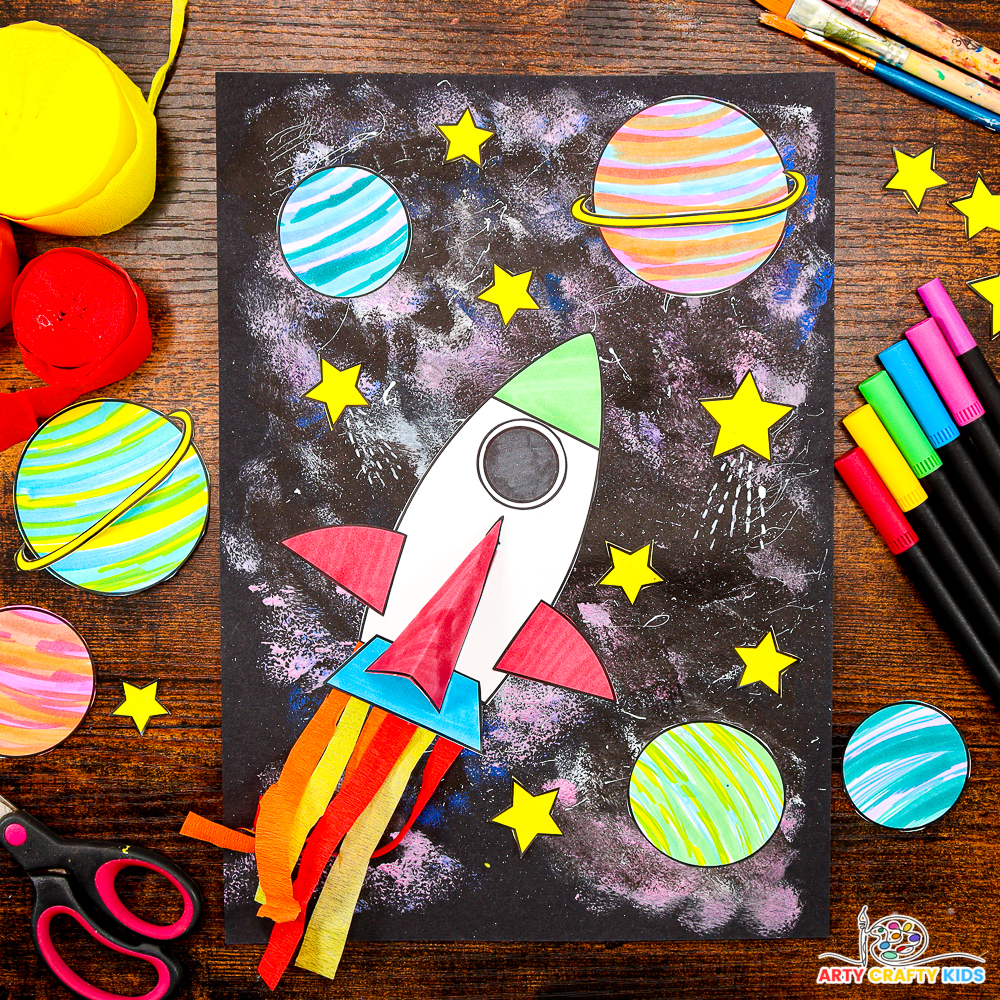
- On a sheet of black construction paper, sketch out designs with glow-in-the-dark paint or markers. Ideas include stars, planets, or abstract designs.
- Allow the paint to dry completely.
- Once the paint is dry, turn off the lights and see the artwork glow in the dark! You can also experiment with different designs or create glowing “graffiti” art.
This project helps kids work with light and dark contrasts, and the glow-in-the-dark effect adds a fun twist to traditional art activities.
5. Paper Towel Tie-Dye
What you’ll need:
- Paper towels
- Washable markers
- Water (in a spray bottle or small bowl)
- Plastic tray or surface to work on
Paper towel tie-dye is a simple and fun way to create beautiful patterns with minimal effort. This project is great for younger kids as it helps with color mixing and introduces the concept of dyeing fabric in a safe, low-mess way.
How to do it:
- Lay a sheet of paper towel on a flat surface.
- Use washable markers to draw bright patterns or shapes all over the paper towel. Encourage children to create their own designs or experiment with blending colors.
- Spray or lightly sprinkle water over the paper towel. Watch as the colors start to blend and spread out, creating tie-dye effects.
- Let the paper towels dry. Once dry, you’ll have vibrant, colorful designs that are fun to display.
This project teaches kids about color blending and helps them develop their fine motor skills as they draw and control the spray bottle.
6. Shadow Tracing
What you’ll need:
- Paper
- Pencils or markers
- Objects with interesting shapes (e.g., toys, plants, or hands)
Shadow tracing is a wonderful way to teach kids about light, shadow, and shapes while giving them the chance to create unique artwork. This project is especially great for curious minds who want to learn how light interacts with objects.
How to do it:
- Set up a light source, like a flashlight, lamp, or sunlight.
- Place an object (like a toy, hand, or plant) in the light so that it casts a shadow on a piece of paper.
- Have children trace the shadow’s outline with a pencil or marker.
- Once the basic shape is traced, encourage kids to add details to the shadow drawing, such as patterns, faces, or designs.
This project encourages observation and creativity while allowing kids to explore the science of light and shadows.
7. Tin Foil Sculptures
What you’ll need:
- Aluminum foil
- Markers or paint (optional)
- A flat surface to work on
Tin foil is a versatile material that kids can easily shape into a variety of objects, from animals to abstract sculptures. This project helps develop fine motor skills and spatial awareness as children mold the foil into their desired shapes.
How to do it:
- Tear off a piece of aluminum foil and crumple it into a ball or shape it into a form, such as a bird or a flower.
- Twist and fold the foil to create details and textures. Kids can bend the foil to create arms, legs, or facial features.
- Once the sculpture is shaped, they can paint or color it for added flair.
Tin foil sculptures are an exciting way to encourage creativity and the tactile experience of sculpting.
8. Blow-Paint Art
What you’ll need:
- Liquid watercolor paints
- Straws
- Paper
- Water
Blow-paint art is a whimsical way to create abstract, colorful designs. It’s perfect for kids who enjoy exploring how air can change the direction and behavior of paint.
How to do it:
- Drop watercolor paint in different areas of a piece of paper.
- Use a straw to blow air at the paint, pushing it around the paper to create different patterns.
- Experiment with different amounts of water to see how it affects the paint’s movement and color intensity.
- Let the artwork dry, and admire the beautiful, splattered results.
This project is a fun way to explore air movement, color mixing, and the creation of abstract art.
9. Paper Bag Puppets
What you’ll need:
- Brown paper bags
- Markers, crayons, or colored pencils
- Glue, googly eyes, fabric scraps, or yarn
- Scissors (for older children)
Paper bag puppets are a classic craft that allows children to create characters and then perform with them. Puppetry encourages storytelling, and it’s an ideal way for kids to develop their social and communication skills.
How to do it:
- Use the bottom of the paper bag as the puppet’s face. Color and decorate it with markers or crayons.
- Glue on googly eyes, yarn for hair, fabric for clothes, or any other materials to create the puppet’s features.
- Once the puppet is complete, kids can act out stories and scenarios using their new creations.
This project is great for fostering imagination, creativity, and interactive play.
10. Sand Art Bottles
What you’ll need:
- Colored sand (can be bought or made by mixing colored chalk and sand)
- Empty plastic bottles or jars
- Funnel or spoon
Sand art is a relaxing and visually striking project where kids can layer different colors of sand to create beautiful designs. It’s a fantastic sensory activity that also encourages patience and focus.
How to do it:
- Layer the different colors of sand into the bottle, one at a time, using a funnel or spoon.
- As the sand fills the bottle, kids can create patterns, stripes, or even designs